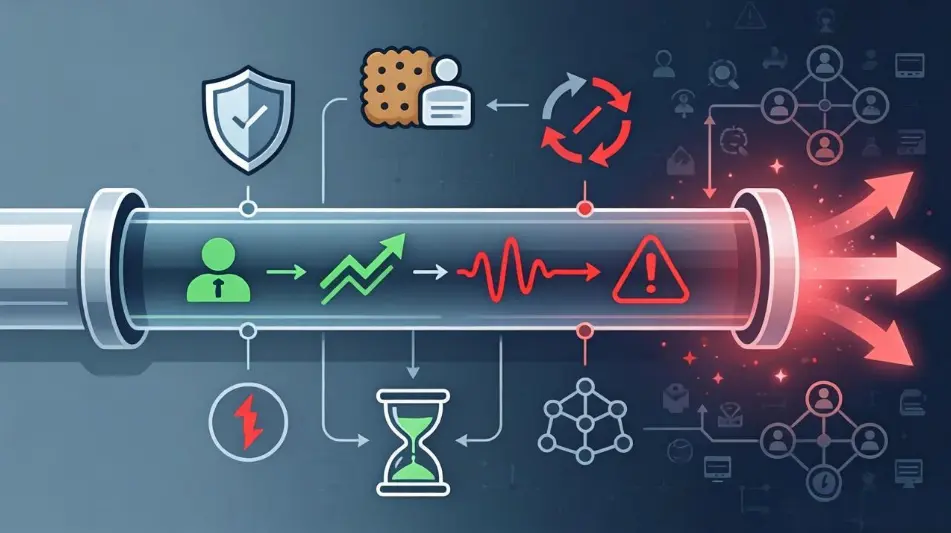
How to Validate Cloudflare Bypass Stability Before You Scale
A few successful requests do not prove that a system is ready for production growth. Early tests often look clean because the workload is too short, too narrow, and too gentle to reveal the failure patterns that appear later. A stack can pass a handful of requests, then break once concurrency rises, sessions age, routes diversify, and repeated access starts to look more automated. Teams usually get a more accurate picture when they evaluate bypass as an operational system instead of a one-time unlock.
That is why the real question is not whether you can reach one protected page today. The real question is whether your workflow stays predictable after more traffic, longer runtime, deeper navigation, and stricter edge behavior begin to interact. Many teams only start comparing cloudbypass with internal tooling after they discover that a short pass test says very little about long-run stability. Before scaling a Cloudflare bypass workflow, operators should validate challenge behavior, session continuity, retry cost, and latency consistency rather than focus only on a simple pass rate.
1. Define what stability means before you add more traffic
Stability should be defined as a measurable operating condition and not as a vague feeling that “it seems to work.” In practice, a stable bypass stack keeps delivering predictable outcomes as request count grows, sessions persist, and the route mix becomes closer to production. If a system performs well only during short and forgiving runs, it is not stable enough to scale.
The first metric is success rate over time. A clean ten-minute window can hide degradation that only appears during a six-hour or twenty-four-hour run. The second metric is challenge rate. Cloudflare’s documentation on Cloudflare challenges makes it clear that challenge behavior is part of an active verification process, so challenge frequency should be treated as a primary health signal instead of a minor side effect.
The third metric is session survival. A workflow that passes the first request but breaks during pagination, search refinement, or detail-page transitions is not ready for scale. The fourth metric is retry inflation. A stack that “works” only after repeated attempts may be masking instability with wasted time, compute, and bandwidth. The fifth metric is latency consistency. Median response time may look fine while p95 and p99 become unstable enough to stall workers and distort throughput.
These five signals create a more honest definition of stability. If they remain controlled while the system expands, scaling may be justified. If they begin drifting early, the problem is not growth itself. The problem is that the stack was never production-ready.
2. Build a validation baseline before increasing concurrency
A strong validation process starts with a baseline that is narrow enough to isolate variables but realistic enough to reflect actual workload patterns. Testing one URL for five minutes is not a real baseline. It is only a demonstration.
Start by defining the route groups that matter in production. Search pages, listing pages, detail pages, filtered views, login-adjacent flows, and API-style endpoints often behave differently under protection. Cloudflare’s guidance on interstitial challenge pages shows why this matters: challenge pages can interrupt normal request flow and act as a gate between the visitor and the destination, so route diversity must be part of validation from the beginning.
Next, define the session model. Decide whether the target workflow depends on persistent cookies, sticky identity, repeated navigation, or time gaps between steps. A system that looks healthy on isolated stateless fetches may fail once the same session needs to survive a sequence of requests.
Then define runtime windows. At minimum, use a short smoke test, a medium soak test, and a long-duration stability test. The smoke test confirms first access. The soak test shows whether repetition changes outcomes. The long run exposes drift, recurrence, and decay. A large share of protected-access problems only becomes visible after the system has been running long enough for patterns to accumulate.
Finally, define acceptable thresholds before running the test. Decide how much challenge exposure, retry overhead, session loss, and tail latency the workflow can tolerate. Without predefined limits, teams tend to reinterpret weak results as “good enough.”
3. Measure challenge rate and not just final pass rate
One of the most common mistakes in protected-access testing is collapsing everything into a single success number. Final pass rate can hide too much. Two systems may both finish with an 85 percent success rate while behaving very differently underneath. One may pass on the first attempt with low friction. The other may hit repeated challenge pages, burn multiple retries, and take much longer to reach the same result.
That is why challenge rate deserves its own dashboard. Track how often a route receives a challenge page, how often the same session is challenged again, how challenge frequency changes by concurrency tier, and whether specific paths show repeated friction. Treat challenge exposure as a measurable cost of access, not as invisible background noise.
This is where cloudbypass should be judged carefully. A provider that looks strong on first-request access but weak on challenge recurrence may still fail once the workflow becomes deeper and more repetitive. A realistic test should separate first-attempt success, challenge-page frequency, and post-challenge completion so the data shows whether the system is genuinely stable or simply forcing its way through extra friction.
A useful challenge report usually includes at least four values: raw pass rate, first-attempt pass rate, challenge frequency, and challenge recurrence inside the same session chain. Once those values are visible, false confidence usually disappears.
4. Verify that sessions survive real multi-step workflows
A bypass stack becomes valuable only when it can preserve continuity across meaningful navigation. That means session validation should follow the same steps that production traffic will follow. If the real workflow includes search, listing, detail, and follow-up actions, the validation path should mirror that exact route chain.
Session testing should focus on whether cookies remain coherent, whether repeated requests maintain the same operating posture, and whether route transitions introduce new friction. Cloudflare’s documentation on cf_clearance is useful here because it highlights how clearance state affects downstream behavior. In practical terms, session integrity is not a side issue. It can determine whether later pages remain reachable after earlier verification events.
This is why stable bypass workflows should be tested across pagination, search refinement, detail-page transitions, pauses between requests, and repeated return visits to the same route. A one-page fetch is too shallow to tell you whether the session can survive realistic navigation.
The most revealing session tests usually include at least one stricter route and one longer pause between requests. That is where drift tends to appear. A system that survives the easiest page sequence is not automatically ready for the harder one.
5. Measure retry inflation before it becomes a hidden cost problem
Retries are part of normal distributed systems, but unstable stacks often hide behind them. A workflow that reaches an acceptable final success rate only after repeated attempts may look viable during a shallow review while quietly destroying throughput and budget.
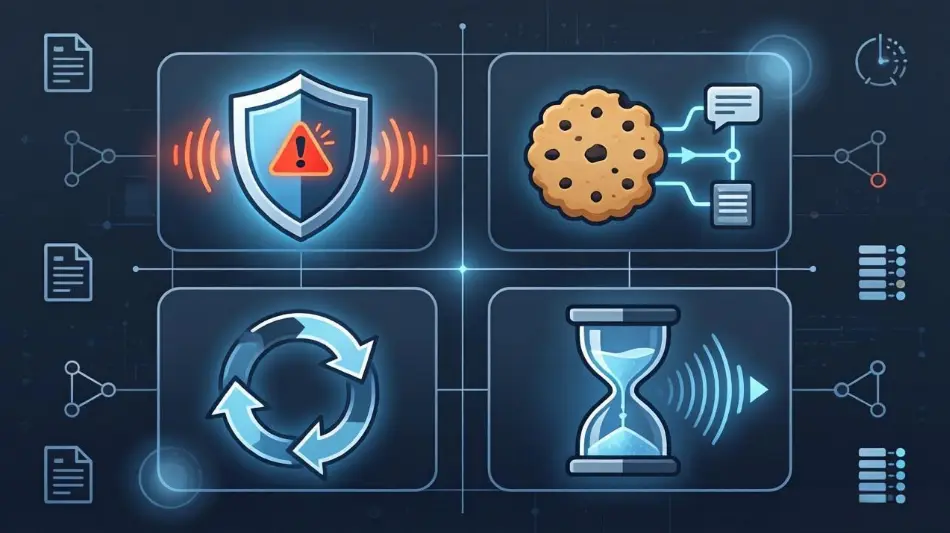
Track first-attempt success, second-attempt success, and third-attempt success separately. Then calculate retries per success, extra wait time introduced by backoff, and wasted work tied to requests that never became useful outcomes. These numbers turn “it eventually worked” into an operational cost profile.
This is also where request timing discipline matters. The HTTP header Retry-After exists for a reason. When a server signals that the next request should wait, ignoring that signal can turn a temporary slowdown into a self-inflicted retry storm. Systems that keep pushing during resistance often create their own instability.
Retry inflation should therefore be treated as a first-class validation metric. If pass rate looks healthy only because the system is constantly retrying, the test result is already telling you that scaling will be expensive and fragile.
6. Compare latency distribution instead of celebrating the average
Average latency is too weak to guide a scale decision. In protected environments, instability often appears first in the tail and not in the mean. A small increase in average response time may look harmless, while p95 and p99 reveal that workers are starting to stall, sessions stay open longer, and queues begin to expand.
Measure latency by route, by concurrency tier, and by whether a challenge event occurred before completion. Also separate request-level latency from end-to-end workflow latency. A page may appear acceptable when measured in isolation, yet the full workflow becomes too slow once challenge handling, redirects, retries, and cookie propagation are included.
This is especially important for teams that plan to scale task volume rather than just request volume. A stack that is “fast enough” on individual pages may still be too slow for production if multi-step workflows accumulate delay faster than expected.
7. Test the failure modes that appear after growth
Scaling does not simply multiply traffic. It changes the behavior of the system. That is why good validation does not wait for production to reveal failure patterns. It tests them on purpose.
One failure mode is session drift. The first few requests work, but later pages begin receiving different challenge treatment or lose continuity altogether. Another is concurrency-sensitive resistance. Cloudflare’s documentation on rate limiting rules shows that thresholds can shape how the edge responds once request volume crosses certain boundaries, so concurrency must be tested as a direct input and not just as a larger version of the same traffic.
A third failure mode is fake stability through retries. The workflow continues producing some results, but only by spending more attempts, more wait time, and more cost per useful outcome. A fourth is route diversity exposure. Friendly routes keep passing while stricter routes fail once the workflow expands. A fifth is long-run decay. Short tests look strong, but longer runs reveal repeated challenge exposure, stale state, or identity inconsistency across workers.
These are not edge cases. They are normal scale-time failure modes. The sooner they are measured, the cheaper they are to fix.
8. Use a staged validation model instead of a single yes or no test
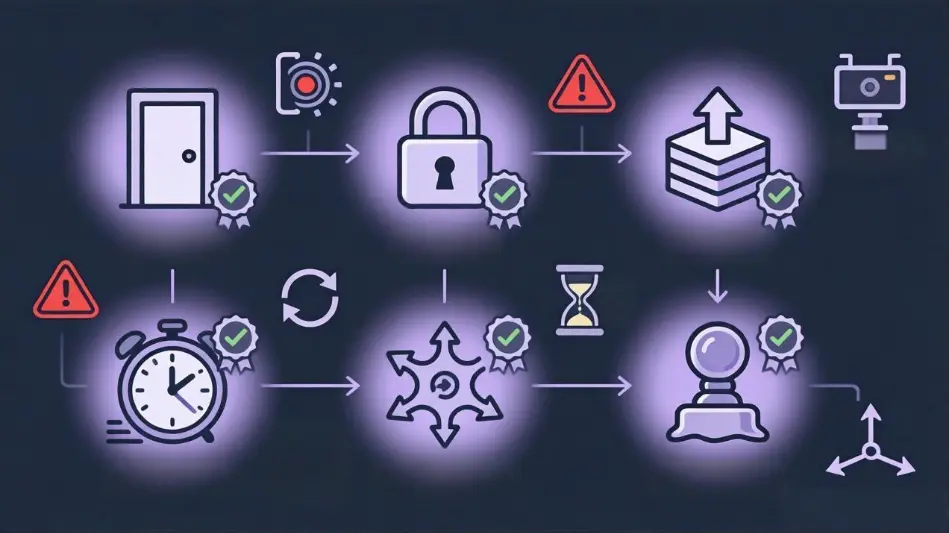
A staged validation workflow produces better decisions because each stage isolates a different property of stability. Instead of one vague pass-or-fail outcome, you get a structured view of where the system begins to weaken.
Stage one confirms first-request access on target routes. Stage two repeats those routes inside one persistent session. Stage three raises concurrency while keeping the route set constant. Stage four extends runtime to observe drift. Stage five adds route diversity and deeper workflows. Stage six compares cost per successful outcome so the technical result can be judged against operational reality.
This staged model makes diagnosis cleaner. If instability appears in stage three, the problem is likely pressure sensitivity. If it appears in stage four, the issue may involve persistence, session aging, or repeated exposure. If only stage five breaks, route-specific controls may be stronger than the initial sample suggested.
cloudbypass is easier to evaluate when this staged model is used consistently. Without staged testing, many teams confuse first access with durable access and scale too early.
9. Decide what must pass before scale is approved
A bypass stack should not move to scale because it feels promising. It should move because the metrics repeatedly clear predefined thresholds. Before rollout, define the minimum acceptable first-attempt success ratio, the maximum acceptable challenge rate, the maximum retries per success, the minimum session survival threshold, and the p95 latency ceiling for each intended concurrency band.
It also helps to define route-level approval. A workflow that performs well on low-value pages but fails on the route that actually matters is not ready, even if the aggregate numbers look respectable. The scale decision should reflect the hardest important route, not just the easiest available one.
This is also the moment to compare technical access with economic access. If the stack reaches the destination but spends too many attempts, too much compute, or too much session time to get there, the result may still fail the approval gate. Before scaling bypass operations, teams should confirm that challenge rate, retry inflation, session survival, and tail latency remain within explicit limits.
10. Avoid the validation mistakes that create false confidence
Several mistakes repeatedly lead teams to scale too early. The first is testing only one route. The second is relying on very short runs. The third is reporting final success without separating challenge exposure from true first-attempt completion. The fourth is ignoring wait signals and treating every failure as an instruction to retry immediately.
Another mistake is mixing unrelated causes together. Weak session handling, low-quality traffic sources, route-specific controls, and undisciplined retry logic can all hurt outcomes, but they should be isolated during validation instead of blended into one number. Overvaluing averages is another common error. A workflow can look good on average while still failing badly in the tail.
The biggest mistake, though, is approving scale before the system has survived realistic production-like navigation more than once. Most false confidence comes from oversimplification. Real protected workflows are stateful, time-sensitive, and route-dependent. The validation method has to reflect that reality.
11. Treat stability as a scaling requirement and not a nice-to-have
Bypass stability is not proven by one clean screenshot or one successful request. It is proven when the system remains predictable as traffic rises, sessions deepen, routes diversify, and runtime extends. That is why validation must happen before scale and not after rollout begins.
Teams that measure challenge rate, session continuity, retry inflation, and tail latency make better decisions than teams that look only at early pass rates. A stable stack is not the one that gets through once. It is the one that keeps delivering controlled, repeatable outcomes when the workload starts to look like production.