FamilyTreeNow public-record response schema: Browser Automation or an API Layer
The choice between browser automation and an API access layer for FamilyTreeNow public-record response schema should follow the interaction requirement, not the number of features in each tool. Public content retrieval is usually a good place to start with Cloudbypass API; a full browser is justified when clicks, forms, rendering state, or multi-step navigation are genuinely required.
Decision matrix
| Dimension | API access layer | Browser automation |
|---|---|---|
| Public content retrieval | Preferred for a lighter workflow | Often unnecessary |
| Multi-step interaction | Not sufficient by itself | Better aligned with the task |
| Repeated monitoring | Evidence fields are easier to standardize | Runtime and maintenance are heavier |
| Visual page state | Validates response content | Can inspect rendered and interaction state |
| Failure review | Final URL, status, and body range are compact | Requires screenshots, browser logs, and state |
Scenario one: stable public pages
Service pages, contact routes, regional destinations, and shared templates can drift independently, so page identity and content completeness should be checked separately. When the task needs titles, update markers, product attributes, or service copy, an access layer plus identity checks usually provides a lower-cost and more reviewable result.
Scenario two: interaction is essential
A browser has clear value when content appears only after region selection, component expansion, pagination, or a multi-step flow. Break those tasks into explicit steps and record page markers before and after each action.
Compare total operating cost
Include browser-version maintenance, compute, retries, log storage, and human review rather than comparing request price alone. Test a representative week and calculate cost per validated result.
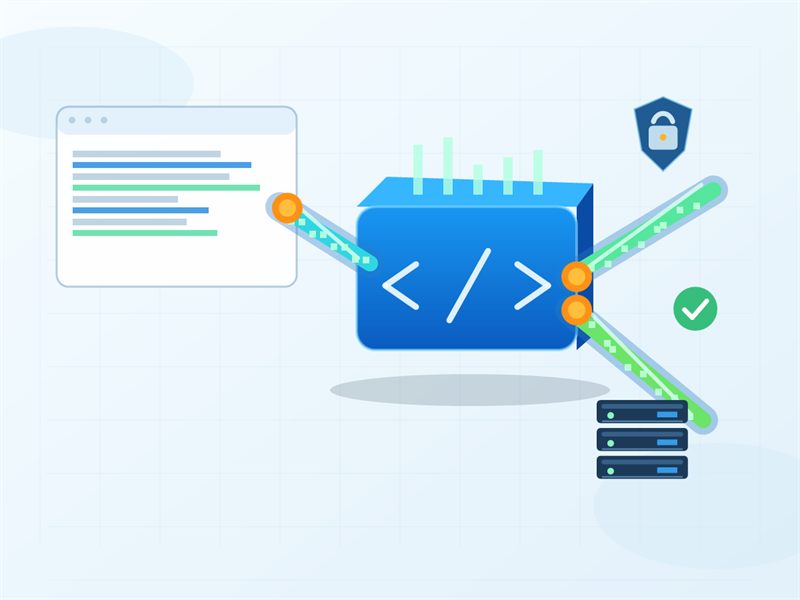
A gradual migration path
- Move pure-read URLs to the Cloudbypass API access layer first.
- Keep only interaction-dependent pages in the browser queue.
- Use the same identity and evidence checks for both paths.
- Review browser tasks monthly to see whether any can return to lightweight retrieval.
Boundaries
Both approaches should stay within approved public-page scope and reasonable frequency. Account areas, personal data, explicit restrictions, or unclear sources require a stop and human decision.
Developer contract for FamilyTreeNow pages
Useful FamilyTreeNow keyword groups include people search, genealogy records, public-record results, historical addresses, possible relatives, phone associations, privacy opt-out, and record removal. In a Cloudbypass API integration, those terms should map to narrow page contracts rather than a broad collection mandate. Define an allowlisted route, an expected page class, two structural markers, and a retention rule before sending a request. The response object should expose the final URL, status, content type, body-size range, elapsed time, and parser version without persisting the personal values displayed on the page.
Treat the integration as a typed boundary. Retrieval code returns evidence; a separate validator decides whether the response is a search form, results page, detail page, error page, or opt-out flow. Downstream code should receive only the fields required for the stated task. Unit tests can use synthetic names and redacted fixtures, while integration tests should exercise only approved public URLs at a conservative cadence. This keeps debugging reproducible without turning logs into a second people-search database.
Privacy-aware acceptance criteria
A successful request is not enough. Acceptance requires the intended destination, the expected page class, required regions, and a bounded response size. Stop when access restrictions, account areas, sensitive data, or unclear authorization appear. Provide a deletion path for fixtures and failure samples, document the owner of every retained field, and never use aggregated records as a substitute for authoritative identity, employment, credit, housing, or eligibility decisions.
FAQ
Is browser automation always more reliable?
No. It handles interaction but introduces more runtime state and maintenance complexity.
Can both approaches be used together?
Yes. Use lightweight retrieval for pure reads and a browser only for pages that require interaction, with shared validation fields.