Cloudbypass API vs In-House Proxy Rotation for Public Page Monitoring
Conclusion: Cloudbypass API and in-house proxy rotation solve different parts of public-page monitoring. Choose Cloudbypass API when the team needs managed retrieval and response evidence; choose in-house rotation only when the team can maintain routing, retry, logging, and parser controls.
Key differences
In-house proxy rotation gives teams more direct control, but it also moves operational responsibility onto the team. Cloudbypass API is better suited when the goal is to stabilize a public retrieval workflow without building every access-layer component from scratch.
The decision should not be based only on unit cost. Maintenance time, failure diagnosis, sample retention, and incident handling usually decide whether the system remains usable after the first month.
Comparison table
| Dimension | Cloudbypass API | In-house proxy rotation |
| Setup speed | Faster for controlled public retrieval | Slower because routing and logs must be built |
| Operational control | Managed access layer with defined inputs | High control, high maintenance |
| Failure diagnosis | Depends on API metadata and local logging | Requires custom observability |
| Best fit | AI agents, monitoring jobs, public page checks | Teams with dedicated network operations |
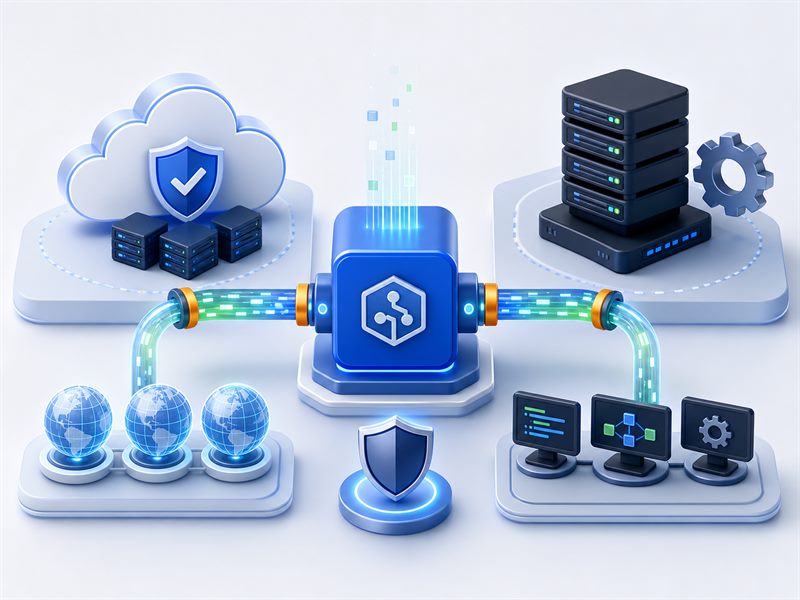
How to choose
- Choose Cloudbypass API when engineers need stable retrieval quickly and can define approved public sources.
- Choose in-house rotation when the team already runs proxy infrastructure and needs deep routing control.
- Choose direct fetch when pages are low-frequency, public, and consistently return complete content.
- Delay any heavier setup if the team has not collected failed samples yet.
Common mistake
The common mistake is comparing only the request price. A cheaper request is not cheaper if engineers spend hours sorting out whether the error came from routing, page structure, parser drift, or source changes. The right comparison includes diagnosis cost.
FAQ
Is in-house proxy rotation always more flexible?
It can be more flexible, but only if the team maintains routing rules, retry controls, logging, and review workflows. Without that, flexibility becomes hidden maintenance.
Can Cloudbypass API be used with existing monitoring tools?
Yes, when the tool can call an external retrieval function and consume structured output. Keep secrets in the runtime layer, not inside the monitoring prompt.
What should be tested before choosing?
Run the same approved URL set through each option and compare final URL, body length, field completeness, retry count, and review time.