How Come Identical Requests Show Different Header Normalization Across Networks?
You send the exact same request —
same headers, same order, same user agent, same cookies, same API payload.
On Network A, everything passes smoothly and the headers appear unchanged.
On Network B, the server or edge provider subtly rewrites your headers:
lowercase transforms, reordering, injected validation markers, or missing intermediate hints.
Yet nothing changed in your code.
So why does the edge treat identical inputs differently?
This behavior can seem inconsistent or even random,
but in reality, it reflects a complex interaction between network conditions, trust scoring, fingerprint lineage, and contextual interpretation.
In this article, we break down the invisible layers that cause header normalization to vary,
and how CloudBypass API helps reveal these underlying patterns.
1. Header Normalization Isn’t Static — It’s Contextual
Many developers assume header processing is deterministic.
But modern edge networks treat headers as behavioral signals, not static structures.
Normalization may differ based on:
- client trust score
- historical behavioral consistency
- fingerprint confidence
- regional threat pressure
- session freshness
- network stability
Thus, “same request” doesn’t mean “same interpretation.”
2. Different Networks Produce Different Signal Environments
Even if your traffic is identical, the environment you send it through is not.
Networks differ in:
- NAT behavior
- packet timing jitter
- TLS handshake variance
- TCP congestion signatures
- route-level entropy
- packet fragmentation handling
Edge systems use this environmental data to contextualize your headers.
A benign-looking header set under one network might appear suspicious under another.
3. Edge Nodes Apply Adaptive Normalization
Normalization is not only a formatting step —
it’s a security step.
Depending on model thresholds, nodes may:
- lowercase headers
- reorder them
- insert invisible markers
- route to a deeper verification layer
- strip ambiguous or uncommon attributes
These are subtle adjustments intended to maintain safety.
They change depending on live risk scoring.
CloudBypass API logs these normalization differences to show which factors triggered the adaptation.
4. Why Trust Curves Modify Header Treatment
Headers are tightly coupled to trust.
When trust is high, the edge preserves more original structure.
When trust decays, the edge becomes more aggressive and more defensive.
Triggers for header modification include:
- fingerprint inconsistencies
- session token misalignment
- abrupt route changes
- multi-device pattern mismatch
- low entropy in request timing
So even with identical headers, context drift forces re-normalization.
5. Network Reputation Affects Normalization Intensity
Some networks have clean reputations; others don’t.
Even if you’re doing nothing wrong, your traffic may inherit:
- ASN-level suspicion
- neighborhood IP toxicity
- region-level bot activity
- shared fingerprint clusters
- previous bad traffic patterns
This inherited context affects how the edge rewrites or reorders your headers.
6. Regional Edge Versions Aren’t Always Synchronized
Edge networks deploy models gradually.
This means different regions may run different versions of normalization logic.
As a result:
- Region X preserves your header order
- Region Y rewrites them aggressively
- Region Z injects validation fields
- Region W delays normalization until deeper layers
CloudBypass API maps these regional variances into observable trends.
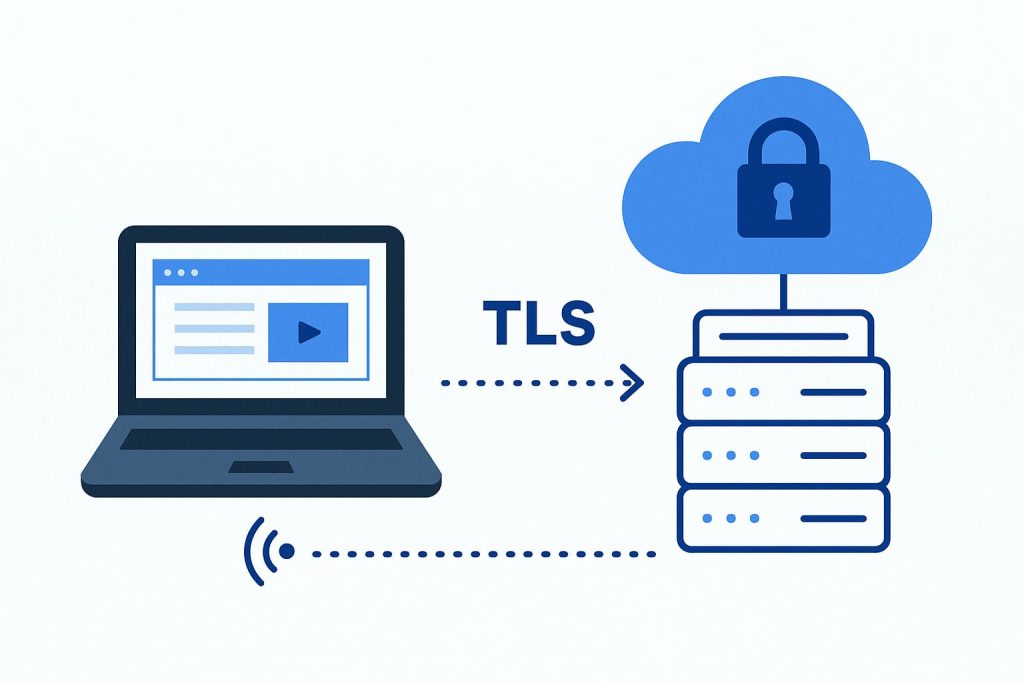
7. Header Normalization Responds to Micro-TLS Signals
Even tiny TLS variations can lead to different header handling:
- extension order changes
- padding differences
- session ticket behavior
- handshake timing drift
- cipher list perturbations
The system correlates TLS identity with header trustworthiness.
If TLS looks unstable, headers undergo heavier normalization.
8. Behavioral Mismatch Triggers Additional Normalization
If headers suggest a browser,
but your navigation cadence resembles automation,
the edge becomes stricter.
This mismatch between:
declared identity vs. observed behavior
is a leading cause of sudden header normalization changes.
CloudBypass helps identify when behavior-fingerprint mismatch crosses thresholds.
9. Multiple Layers of Normalization Exist
Modern networks don’t use a single normalization pass —
they use layered processing:
- Pre-edge syntactic normalization
- Trust-adjusted semantic normalization
- Anti-abuse contextual normalization
- Origin reconciliation normalization
- Application-layer compatibility normalization
Each layer can differ depending on network conditions.
10. CloudBypass API Brings Transparency
CloudBypass API provides insights into:
- how normalized headers differ across networks
- when trust drift causes header rewriting
- which regions modify structure more aggressively
- correlation between TLS stability and normalization intensity
- entropy thresholds that trigger deeper normalization
With this visibility, normalization becomes predictable, not mysterious.
FAQ
1. Why do identical headers look different on different networks?
Because normalization depends on behavioral context, trust score, and environment.
2. Does normalization indicate risk?
Not always — sometimes it’s routine conditioning.
3. Can CloudBypass prevent normalization?
No, but it reveals when and why normalization happens.
4. Are some regions stricter than others?
Yes — regional policies vary widely.
5. Is TLS related to header rewriting?
Often yes — TLS drift triggers deeper inspection.
Identical headers don’t guarantee identical treatment.
Modern edge networks use dynamic normalization systems that respond to trust, environment, behavior, and context.
Different networks produce different signal fingerprints —
so the same request can be interpreted in entirely different ways.
CloudBypass API illuminates these invisible conditioning layers,
turning header normalization from unpredictable behavior into a readable, explainable signal pattern.
Compliance Notice:
This article is for research and educational purposes only.