What Actually Changes When Requests Pass Through Different Resource Paths?
Picture two requests leaving your system at the exact same moment.
They contain the same headers, target the same endpoint, and run the same workflow.
But somewhere along the way, they diverge — not visibly, not catastrophically, just subtly.
One returns smoothly.
The other pauses for a fraction of a second or hits an unexpected handshake delay.
From your perspective, nothing should have changed.
But in reality, a surprising number of things do change the moment traffic gets pushed through different resource paths — even when the destination is identical.
This article explores why identical requests behave differently depending on which path they follow, why this divergence is more common in modern distributed infrastructure, and how CloudBypass API helps reveal the timing layers behind these hidden path differences.
1. Each Resource Path Has Its Own Micro-Geometry
Different routes involve different:
- queue depths
- inter-node hop patterns
- pacing behavior
- timing alignment
- microburst sensitivity
Two paths may look identical on a traceroute but behave differently due to small internal pipelines that operate independently.
These tiny architectural differences can create noticeable timing variance even under light traffic.
2. Carrier-Level Differences Create Hidden Divergence
Even when paths converge at the same edge, they may pass through:
- different backbone providers
- different metro fiber networks
- different interconnect points
- different congestion domains
Carriers apply their own pacing, shaping, and smoothing logic.
Your request inherits those differences — often subtly, sometimes dramatically.
3. Resource Paths Influence Handshake Behavior
TLS handshakes and token negotiations can behave differently depending on:
- clock stability across nodes
- handshake reuse support
- session cache availability
- packet reordering tendencies
This means one path might reuse a session while another silently falls back to a full handshake, causing a measurable pause.
4. Edge Nodes Apply Different Processing Depths
Some edge clusters operate with:
- deeper verification layers
- stricter risk scoring
- heavier normalization logic
- additional routing checks
Others run lighter configurations depending on local capacity and current operational policies.
This “depth difference” explains why identical requests sometimes hit different amounts of processing overhead.
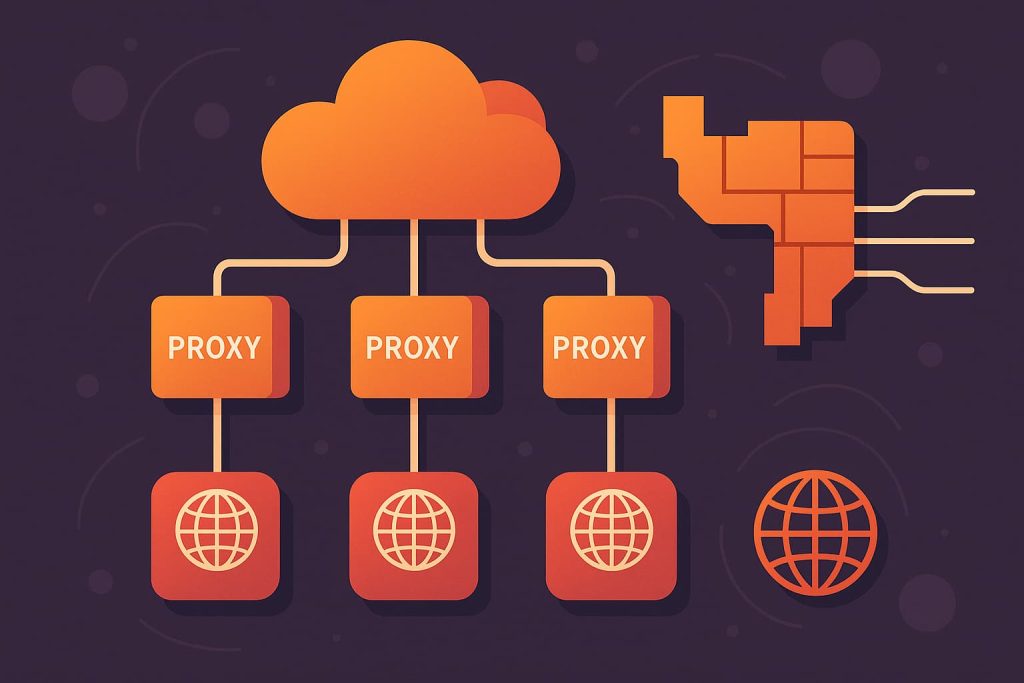
CloudBypass API detects these variances by mapping per-path timing signatures.
5. Caching Layers Vary Widely Across Resource Paths
Cache behavior depends on:
- cache warmth
- region-level TTL interpretation
- object priority
- cache propagation timing
- upstream invalidation windows
Even cached content can behave differently across resource paths if different clusters apply different freshness logic.
6. Network Conditions Shift Independently Across Paths
While one path remains smooth, another may experience:
- transient congestion
- background synchronization
- temporary queue realignment
- pacing window recalibration
These events do not always appear in monitoring dashboards, but they shape how fast a request returns.
7. Some Resource Paths Trigger More Verification Events
Verification systems sometimes treat distinct paths as distinct risk environments.
Factors include:
- upstream IP reputation
- regional scoring variance
- handshake anomalies
- inconsistent identity signals
As a result, one path might pass instantly while another encounters a brief check.
CloudBypass API helps identify which paths are more verification-sensitive.
8. Application-Layer Timing Shifts
Even before the response returns, the backend may take different internal branches based on:
- request timing alignment
- backend queue rollover
- internal routing shard selection
- compute availability
- database affinity behavior
These shifts are subtle but can stack with network factors to produce user-visible timing divergence.
9. Why These Differences Matter More Today
Modern traffic flows across:
- globally distributed edges
- multi-layer caching stacks
- region-aware risk models
- diverse routing ecosystems
This creates a landscape where even small path changes ripple outward into noticeable differences.
Understanding these differences is essential for diagnosing timing anomalies and ensuring stability across diverse workflows.
When two requests follow different resource paths, what changes is not just the route — it’s the entire environment around that route.
Handshake reuse, cache warmth, carrier behavior, edge depth, timing drift, verification sensitivity, and backend flow decisions all evolve independently.
CloudBypass API helps developers see these subtle divergences clearly, providing the visibility needed to understand why identical requests do not always behave the same — and how to maintain consistent performance even in a world of variable paths.
FAQ
1. Why do identical requests behave differently on different paths?
Because timing, caching, tuning, pacing, and edge logic vary independently across resource routes.
2. Does different routing always affect performance?
Not always, but even small differences can accumulate into noticeable delays.
3. Are path differences detectable with basic monitoring tools?
Usually not — traditional dashboards smooth over micro-variance.
4. Why do some paths hit verification more often?
Differences in identity scoring, upstream carriers, or edge risk models can make one path appear “noisier.”
5. How does CloudBypass API help?
It maps per-path timing drift, identifies unstable hops, highlights region-level processing differences, and reveals why certain paths feel slower despite identical inputs.