What Improvements Can Request Path Optimization Bring, and Why Does the Same Request Behave So Differently Across Multiple Routes?
You run the exact same request twice, but the results feel nothing alike.
One route loads smoothly, the other drags.
One delivers data instantly, the other pauses for no clear reason.
Same payload. Same target. Same script.
Yet the “experience” is completely different — and this inconsistency becomes a real pain point for anyone running large-scale data retrieval, automation tasks, or distributed crawlers.
Here’s the short answer before we dive deeper:
request paths aren’t equal,
tiny routing differences create huge timing gaps,
and path optimization directly boosts success rate, stability, and throughput.
This article explains why request paths diverge so dramatically, what optimization actually fixes, and how CloudBypass API helps map and stabilize the “good paths” without feeling like an intrusive add-on.
1. Each Route Injects Its Own Timing Signature
A request never travels in a straight line.
Even two identical requests may pass through:
- different ISP segments
- different intermediary carriers
- different routing agreements
- different congestion levels
- different packet smoothing algorithms
Every hop alters latency, rhythm, queue pressure, and packet ordering.
Because many websites and APIs evaluate timing signals, a request’s credibility and smoothness heavily depend on the route it takes.
This is why one route produces clean, stable phases, while another introduces jitter and delays.
2. Path Optimization Removes “Bad Hops” Before They Cause Damage
Most performance problems aren’t caused by the main path — they’re caused by:
- unstable intermediate nodes
- congested upstream transit
- jitter-heavy segments
- micro-loss between hops
Request path optimization identifies:
- which routes consistently behave poorly
- which hops create timing distortion
- which end-to-end paths deliver the most stable arrival patterns
Then the system actively avoids those paths.
The result isn’t theoretical — it’s directly measurable as:
- fewer timeouts
- fewer retries
- fewer frozen sequences
- faster completion
- cleaner sequencing for dependent tasks
3. Parallel Tasks Amplify the Difference Between Good and Bad Paths
When running batches:
- multi-threaded crawlers
- distributed collectors
- API batch pipelines
- queue-driven task systems
…even a small path disadvantage becomes a massive bottleneck.
One request taking “a bit longer” is not a problem.
One outlier in a parallel batch is a problem, because:
- it stalls hydration
- it holds downstream tasks hostage
- it disrupts sequencing
- it misaligns batch timing windows
Path optimization keeps the slow path from poisoning the whole job.
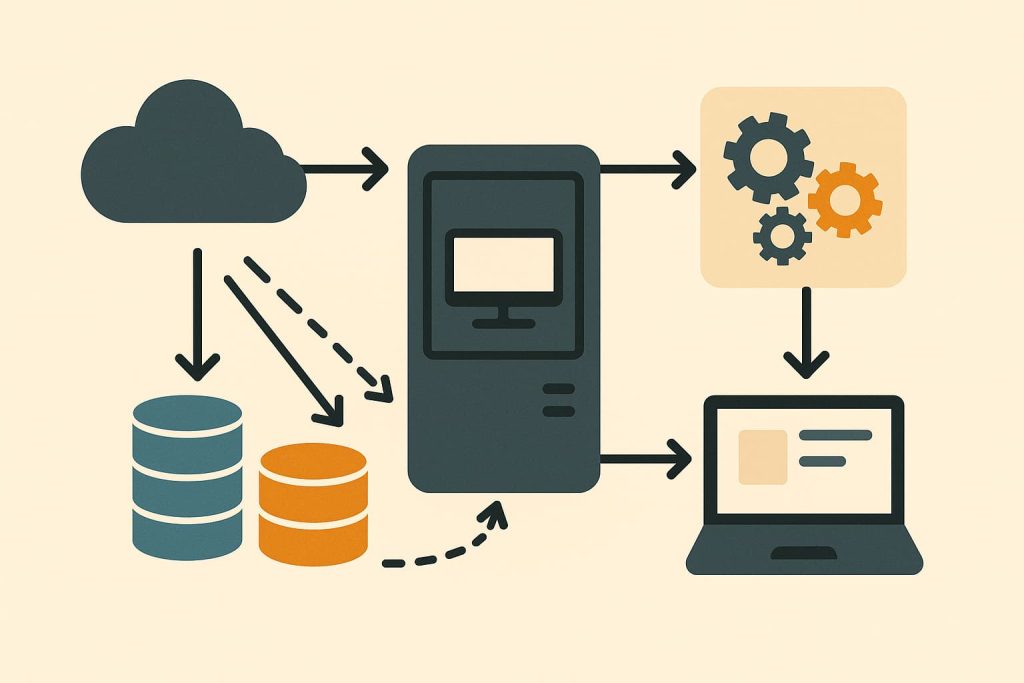
4. The Same Request Looks Different to the Target Depending on the Route
Many modern sites classify incoming traffic using multiple factors:
- jitter stability
- arrival spacing
- burst pattern
- resource sequencing
- TLS behavior
- congestion recovery rhythm
These vary dramatically across routes.
This means:
identical requests from two different paths may receive different evaluation results.
One arrives smooth, predictable, and trustworthy.
The other arrives noisy, jittery, or rhythmically inconsistent — even though you did nothing different.
5. Path Optimization Makes Request Behavior More Predictable
What developers truly want is not “raw speed,” but consistency.
Optimized routing provides:
- steadier timing
- stable retry behavior
- lower jitter variance
- fewer sequencing anomalies
- predictable performance curves
Consistency matters because automation systems depend on stable timing to coordinate retries, batching, and task ordering.
6. Practical Guidance You Can Use Immediately
Here are three steps you can apply even with a small-scale setup.
1. Benchmark routes instead of endpoints
Do not measure success rate at the API level.
Measure:
- per-route jitter
- per-route hop stability
- per-route sequencing variance
2. Cache the best-performing routes
Once a route is proven stable, reuse it for as long as conditions remain consistent.
3. Filter out unstable paths early
Reject routes that show:
- repeated micro-loss
- excessive timing drift
- inconsistent handshake time
- noisy queuing patterns
These small issues snowball fast.
7. Where CloudBypass API Fits In
CloudBypass API specializes in observing path behavior, not bypassing anything.
Its routing telemetry shows:
- timing drift across different paths
- hop-level jitter characteristics
- route stability under high concurrency
- regional performance variance
- sequencing integrity across parallel tasks
By integrating it into your request pipeline, you’re not changing how requests behave — you’re understanding why they behave differently, and selecting the most stable paths automatically.
It feels less like adding a tool and more like turning on visibility you should’ve had from the beginning.
A request’s performance is shaped more by the path than by the payload.
Dynamic routes behave differently because each introduces its own rhythm, jitter, and congestion signature.
Optimizing these paths is the fastest way to improve:
- consistency
- success rates
- batch performance
- cross-region stability
CloudBypass API simply makes the best paths visible — and the worst paths avoidable.