Is a Request Failure Tolerance Mechanism Really Necessary, and What Role Does It Play in Long-Running Tasks?
A long-running task can look healthy for a while, then quietly start bleeding efficiency.
One node times out, a few retries pile up, output arrives unevenly, and the pipeline slows without crashing.
You do not notice a single dramatic failure. You notice a slow decline in success rate, stability, and completion time.
Mini conclusion upfront
Failure tolerance is not optional for long-running tasks.
It protects throughput by preventing small faults from spreading.
It keeps progress consistent when the environment drifts.
This article answers one practical question
why failure tolerance matters, what it actually does inside a pipeline, and how to implement it without turning your system into a retry storm.
1. Why Long-Running Tasks Fail Differently Than Short Tasks
Short tasks tend to end cleanly. They succeed quickly or fail quickly.
Long-running tasks do not fail in a single moment. They fail in pieces, and those pieces often look harmless until they stack up.
1.1 The Slow Failure Patterns That Hide in Plain Sight
Common long-task failure patterns include
slow degradation of certain nodes
partial output gaps that appear later
silent retries that consume capacity
sequence breaks that corrupt downstream steps
repeated micro-failures that never trigger alarms
The dangerous part is not the first timeout.
The dangerous part is what the system does next, and whether that behavior keeps the pipeline predictable.
1.2 Why Small Faults Spread in Long Pipelines
Long pipelines usually have three properties that make micro-failures contagious
they run many steps in sequence
they run many steps in parallel
they depend on stable ordering and stable pacing
If a single step becomes unstable, it can create backpressure, reorder completion, and shift timing across the entire run.
Without a tolerance mechanism, the pipeline does not just absorb faults. It amplifies them.
2. What Failure Tolerance Actually Means in Practice
Failure tolerance is not retry everything.
It is controlled recovery that preserves progress and protects the pipeline from self-inflicted overload.
2.1 The Core Goal of Tolerance
A good tolerance design answers three questions for every failure
Is this likely transient or persistent
How much should we retry before we change strategy
How do we avoid losing the work that already succeeded
If your mechanism cannot answer those questions, you do not have tolerance. You have noise.
2.2 What a Strong Tolerance Mechanism Includes
A strong mechanism usually includes
a clear definition of failure types
limits on retries per stage and per unit of work
backoff rules that prevent bursts
checkpointing so work is not repeated
node health scoring and isolation
safe fallback paths when primary paths degrade
a consistent policy for preserving ordering where ordering matters
2.3 What a Weak Mechanism Looks Like
A weak mechanism often shows up as
infinite retries
no separation between transient and persistent failures
random switching that breaks timing consistency
repeating the same poisoned route
no record of partial progress
no isolation, so unhealthy nodes keep receiving new work
Weak mechanisms create the illusion of resilience while draining throughput, raising variance, and breaking sequencing.
3. The Hidden Cost of No Tolerance
If you do not build tolerance, you pay in three places, even if your system looks like it is still running.
3.1 Throughput Loss
Workers waste time on repeated failures.
Queues grow.
Healthy tasks wait behind broken ones.
Your concurrency becomes a liability because it multiplies the cost of instability.
In practice, this shows up as
higher average completion time
lower completed tasks per minute
more idle time on healthy nodes because the scheduler is stuck managing chaos
3.2 Data Quality Loss
When the pipeline is forced to restart segments blindly, data quality degrades quietly.
Typical symptoms include
pagination skips
duplicates
partial chains that return inconsistent results
items that were fetched but never processed because the sequence broke later
The worst part is that logs may show success at the request level while the dataset becomes unreliable.
3.3 Stability Loss
Without tolerance, failure handling becomes chaotic.
Retry bursts appear.
Timing becomes uneven.
Success rates decay over time because the system keeps pushing more work into unstable conditions.
Long-running systems rarely die loudly. They decay.
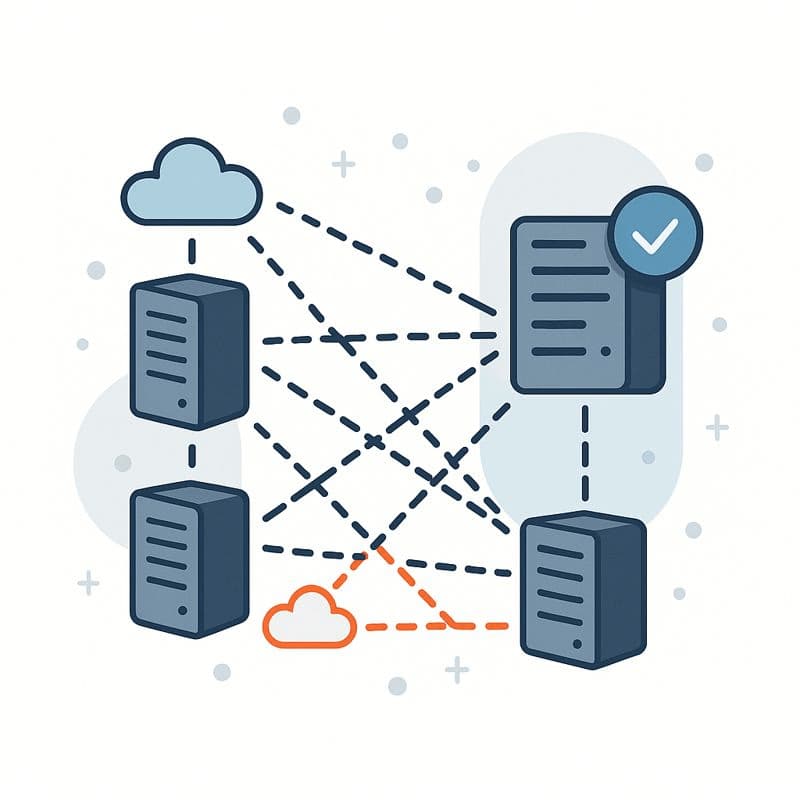
4. The Three Failure Types You Must Separate
Long-running pipelines perform best when they treat failures differently.
Treating all failures the same is how retry storms happen.
4.1 Type 1 Transient Failures
Examples include
short timeouts
brief route jitter
temporary congestion
momentary service slowdown
4.1.1 Correct Response
Use limited retries with backoff.
Keep the same node if health remains strong.
Preserve the local state so a retry resumes the same unit of work rather than restarting everything.
4.2 Type 2 Persistent Failures
Examples include
repeat timeouts on the same node
consistent slowdowns
repeated handshake stalls
high failure rate within a short rolling window
4.2.1 Correct Response
Demote the node.
Switch to a healthier node.
Apply a cool-down window so the unhealthy node stops receiving new tasks temporarily.
Do not keep retrying the same path with the same conditions.
4.3 Type 3 Structural Failures
Examples include
invalid responses
broken sequences
missing dependency steps
unexpected format shifts
responses that appear successful but violate assumptions
4.3.1 Correct Response
Stop and mark the task as requiring review or a structural branch.
Do not brute-force retries.
Protect downstream tasks from corrupted inputs by isolating the affected segment.
Structural failures are not solved by more persistence. They are solved by better detection and controlled branching.
5. A Simple Failure Tolerance Pattern New Users Can Copy
This is a practical baseline that works in most pipelines and scales well.
5.1 Step 1 Checkpoint After Each Logical Unit
Record a durable progress marker such as
page number
cursor
task index
last completed item id
Checkpoints should be cheap, frequent, and tied to logical work boundaries.
5.2 Step 2 Retry With Limits
Set a small maximum retry count per unit.
Use per-stage caps so one fragile stage cannot consume the entire retry budget.
5.3 Step 3 Backoff Instead of Hammering
Increase wait time after each failure.
Backoff prevents burst retries that overload networks and reduce success probability.
5.4 Step 4 Isolate Unhealthy Nodes
If a node fails repeatedly within a defined window, remove it from rotation temporarily.
Isolation is what stops micro-failures from spreading.
5.5 Step 5 Re-Queue Only What Failed
Do not restart the full job when only one segment failed.
Restore from checkpoint and re-run only the incomplete unit.
This pattern prevents small failures from infecting the entire run, and it keeps output consistent even when conditions drift.
6. Where CloudBypass API Fits Naturally
Failure tolerance is only as good as your ability to measure what is failing.
Teams often guess whether a slowdown is transient, whether a node is deteriorating, or whether a route is becoming unstable.
CloudBypass API supports long-running stability by exposing
node-level timing drift
route health changes over time
phase-by-phase slowdown signals
retry pattern distortion
stability differences between origins
6.1 What This Enables Inside Your Tolerance Logic
You can decide earlier
when a failure is transient
when a node is deteriorating
when a route should be replaced
when a sequence break is happening
Instead of repeating failures blindly, you isolate the real bottleneck early and protect throughput.
A failure tolerance mechanism is necessary because long-running tasks do not fail cleanly.
They fail gradually, in fragments, and often without visible alarms.
Tolerance protects progress, prevents retry storms, and keeps the pipeline stable even as routes and nodes drift.
If you care about consistent output over long runs, failure tolerance is not a feature.
It is the foundation.