When Multiple Nodes Work Together, How Are Requests Distributed, and Where Does Stability Come From?
Your workload is growing, so you add more nodes.
At first it feels like the obvious fix: more nodes should mean more speed, more capacity, and fewer failures.
Then the weird part starts.
Some nodes finish tasks quickly while others lag behind.
Some request batches come back smooth, others return unevenly.
Success rates look fine for a while, then drift downward even though you added resources.
This happens because multi-node execution is not just about having more nodes.
It is about how requests are distributed, how timing stays consistent, and how the system prevents weak nodes from poisoning the whole pipeline.
Mini conclusion upfront:
Distribution determines whether scale helps or hurts.
Stability comes from controlled variance, not raw parallelism.
Health-aware scheduling beats random balancing every time.
This article focuses on one practical question:
how requests should be distributed across nodes, and where true stability actually comes from.
1. Why Multi-Node Systems Become Unstable Even With More Capacity
Adding nodes increases the number of moving parts:
more network paths
more timing signatures
more congestion patterns
more chances for one node to behave badly
1.1 More Nodes Means More Variance, Not Just More Power
Every node has its own conditions: route quality, jitter profile, connection reuse behavior, and resource limits.
When you scale from one node to ten, you do not just multiply capacity.
You multiply variance.
Variance shows up as small inconsistencies at first:
a few requests take longer on one node
a few retries appear in one region
a few sequences return out of order
If the scheduler treats these as normal and keeps distributing evenly, those small inconsistencies accumulate into visible instability.
1.2 How a Single Weak Node Poisons the Pipeline
If distribution is naive, a single weak node can create:
slow tail latency that delays batches
retry cascades that fill queues
ordering breaks that confuse downstream steps
uneven completion that reduces throughput
The system might still look busy, but output quality and predictability degrade.
A pool can be “fully utilized” while producing worse results than a smaller, healthier pool.
2. The Three Common Distribution Models and Their Hidden Tradeoffs
Not every distribution model scales the same way.
Some models look fine at small scale and collapse at larger scale because they ignore health and timing.
2.1 Model 1 Round-Robin Distribution
Requests rotate evenly across nodes.
2.1.1 Strength
It is simple and predictable.
It also keeps per-node volume roughly even, which feels fair.
2.1.2 Hidden Weakness
It treats all nodes as equal.
One weak node receives the same load as a strong node.
Tail latency rises fast because your end-to-end completion time becomes gated by the slowest node inside each batch.
Round-robin is often acceptable only when nodes are extremely uniform, which is rare in real networks.
2.2 Model 2 Random Distribution
Requests are assigned randomly.
2.2.1 Strength
It is easy to implement.
It also reduces obvious patterns and can smooth out some deterministic clustering.
2.2.2 Hidden Weakness
Random does not mean fair.
Bursts can cluster onto one node without warning.
When a cluster lands on a weak node, the entire system experiences sudden pockets of slowdown that are hard to diagnose.
Random distribution often produces the worst kind of instability: instability that looks like pure chance.
2.3 Model 3 Score-Based Distribution
Requests are assigned based on node health signals.
2.3.1 Strength
Best stability and best long-run success rates, because the scheduler uses evidence.
Healthy nodes get more work, weak nodes get less work.
2.3.2 Hidden Weakness
It requires measurement and feedback loops.
If scoring logic is poorly tuned, the pool can oscillate, switching too aggressively and creating its own timing variance.
In real systems, score-based distribution is the only model that scales cleanly, but it must be disciplined.
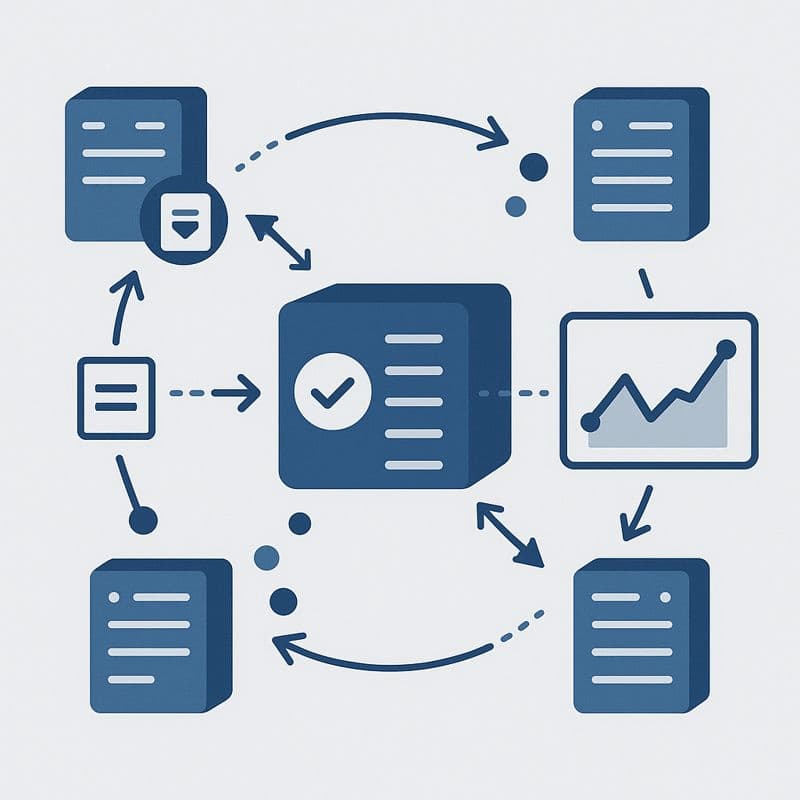
3. Where Stability Really Comes From
Stability is not created by perfect nodes.
It is created by controlled behavior under imperfect conditions.
3.1 The Three Behaviors Stable Pools Share
Stable multi-node systems do three things well:
they measure node health continuously
they route work away from deteriorating nodes quickly
they prevent unstable nodes from receiving critical workloads
The system does not need every node to be perfect.
It needs the scheduler to isolate bad behavior before it spreads.
3.2 Controlled Variance Beats Raw Parallelism
Many teams scale parallelism first and control variance later.
That usually fails.
Raw parallelism amplifies problems:
more concurrency makes tail latency more visible
more workers multiply retry bursts
more nodes increase route mismatch
Controlled variance means you deliberately restrict where fragile tasks go, and you expand only where signals stay stable.
4. Why Tail Latency Is the Real Enemy in Node Pools
Most teams focus on average latency.
But pools collapse because of tail latency.
4.1 What Tail Latency Really Means
Tail latency means a small percentage of requests take far longer than the rest.
Even if 95 percent are fast, the last 5 percent can dominate completion time when you wait for batches.
4.2 How Tail Latency Breaks Multi-Node Execution
In multi-node pools, tail latency causes:
batch completion delay
pipeline blocking
queue expansion
retry storms
downstream timing drift
Once drift begins, success rates often decay even without explicit failures.
The system becomes less predictable, and unpredictability is expensive.
4.3 The Silent Feedback Loop That Makes It Worse
Tail latency triggers retries.
Retries add load.
Added load increases tail latency.
That loop can turn a healthy pool into an unstable one without any single dramatic event.
This is why “adding more nodes” can make things worse: it increases the surface area for tail events.
5. A Practical Distribution Strategy New Users Can Copy
A stable strategy does not need to be complex.
It needs to be consistent and health-aware.
5.1 Step 1 Group Nodes Into Tiers
Tier A consistently stable
Tier B usable but variable
Tier C fallback only
Tiering prevents weak nodes from being treated as equal citizens.
5.2 Step 2 Send Critical Tasks to Tier A Only
Keep fragile sequences away from noisy nodes.
If a task depends on strict ordering, stable timing, or multi-step continuity, do not run it on Tier B or Tier C.
5.3 Step 3 Use Small Probes to Test Tier B Before Assigning Real Work
Do not throw full batches at uncertain nodes.
Probe with small units, watch timing drift and tail behavior, then promote cautiously.
5.4 Step 4 Isolate a Node After Repeated Failures
Remove it temporarily instead of hoping it recovers.
Isolation is a stability feature, not a punishment.
5.5 Step 5 Control Concurrency Per Node
A strong node can handle more parallelism than a weak one.
Do not use one global concurrency value for the entire pool.
Per-node concurrency control is one of the fastest ways to reduce tail latency and keep the pool predictable.
5.6 Step 6 Protect Ordering Where Ordering Matters
If downstream steps assume consistent ordering, enforce it.
Do not let “fast nodes” reorder outputs in ways that break the pipeline.
This is especially important in long-running collections where partial order breaks are hard to detect until later.
6. Where CloudBypass API Fits Naturally
Multi-node stability depends on visibility.
If you cannot see timing drift and route degradation, distribution becomes guesswork.
CloudBypass API helps teams distribute work more intelligently by exposing:
node-level timing drift
route health differences between nodes
phase-by-phase slowdown signals
stability variance under concurrency
patterns that predict deterioration before failures spike
6.1 What This Enables for Scheduling Decisions
It becomes easier to decide:
which node should receive critical tasks
which node should be demoted
when to switch paths without causing oscillation
how to keep timing behavior consistent across the pool
The result is smoother output and higher long-run success rates, even under changing network conditions.
Multi-node execution becomes stable when distribution is health-aware, not equal-weight.
The goal is not to use every node equally.
The goal is to protect the pipeline from unstable nodes and control timing variance.
When requests are distributed with scoring, tiering, and concurrency control:
tail latency shrinks
retry storms fade
success rates hold steady
long tasks stay smooth